Wheel alignment is the process of measuring and adjusting the angles of your wheels to match your vehicle manufacturer’s settings. A check about once a year is a good starting point. Get it checked sooner if your car pulls to one side, the steering wheel sits crooked while you drive straight, or one edge of a tire wears faster than the rest. A hard hit from a pothole or curb also calls for an inspection.
If you’re looking into wheel alignment in Brooklyn after hitting a pothole, tell the shop which wheel took the hit and what changed afterward. The same impact that shifts a wheel angle can damage a tire, bend a rim, or damage a suspension part. That detail helps the technician decide where to look first.
What Does a Wheel Alignment Actually Adjust?
A technician makes adjustments to the steering and suspension, the parts that hold the wheels in place and let them move. Those adjustments change how the tires sit and point when the car is on level ground. The correct settings vary by vehicle.
Some wheels are designed to lean or point slightly inward, so a technician uses the factory range for your model and checks the angles with an alignment machine.
Camber, Toe, and Caster in Plain English
- Camber is how much a wheel leans in or out at the top. Imagine looking at the car head-on. If a wheel leans too far in at the top, the tire’s inner edge can wear faster. Too much outward lean can wear the outer edge.
- Toe is the direction the tires point when viewed from above. Think of standing with your toes pointed slightly inward or outward. When the tires point too far in either direction, they scrub against the pavement as they roll. That can wear down the tread quickly.
- Caster is the tilt of the line the front wheel turns around when you steer. You measure it from the side of the car. Caster helps the car feel steady in a straight line and helps the steering wheel return toward center after a turn.
Read More:
How Often Should You Check Wheel Alignment in Brooklyn?
For a car that steers normally and has even tire wear, ask for an alignment check about once a year. Start with any guidance in your owner’s manual. If you put a lot of miles on your car, asking for a check around a 6,000-mile service is another practical option. A check measures the angles. Whether you need an adjustment depends on those readings and the condition of the steering and suspension.
| What’s happening with your car? | When to get the alignment checked |
|---|---|
| The car tracks straight and the tires wear evenly | About once a year, or at the interval your vehicle manufacturer recommends. |
| The car starts pulling or the steering wheel sits crooked | Book an inspection soon, even if the last check was recent. |
| A wheel hits a deep pothole or curb hard | Have the tire, rim, and suspension inspected promptly. Ask the shop to measure alignment as part of the visit. |
| You’re buying new tires | Ask for an alignment check at installation, especially if the old tires wore unevenly. |
| You’ve replaced steering or suspension parts | Ask whether the repair calls for an alignment before you take the car home. Tie rod replacement is one common example. |
A tire rotation is a convenient time to look for wear you might miss in the driveway. A tire can look fine from the side while its inner edge is wearing down. Ask the technician to compare tread depth across each tire, so you can catch a pattern before it wears through the rest of the tread.
What Are the Signs Your Wheels Are Out of Alignment?
The Car Pulls on a Straight, Level Road
Many streets slope toward the curb to drain rainwater, and a car may drift slightly in that direction. A steady pull that you feel on several level roads is worth checking. Low tire pressure, a tire problem, or a dragging brake can also cause a pull. If you feel it mainly when you press the brake pedal, mention that when you book the inspection.
The Steering Wheel Sits Crooked While the Car Goes Straight
You might notice that the car stays in its lane while the steering wheel is turned a little to the left or right. Pay attention to whether that happens on a level road and whether it started after a curb hit or a repair. The technician can check the wheel angles and see if the way the rear wheels track is affecting where the steering wheel sits.
One Edge of the Tire Wears Down Faster
Compare the inner edge, center, and outer edge of the tread. If one edge is much smoother, the tire may be leaning too far or pointing at the wrong angle. Another clue is feathering, which gives the tread a sawtooth feel. The National Highway Traffic Safety Administration recommends checking tread monthly and replacing tires when the tread wears down to 2/32 of an inch. An alignment can correct the angle that caused the wear, but the rubber already worn away is gone.
What Should You Do After Hitting a Brooklyn Pothole?
NYC DOT repaired more than 229,000 potholes on city streets and major roads in fiscal year 2026. If you hit one hard, pull over somewhere safe and look at the tire and rim. A sudden drop in tire pressure, a bulge in the sidewall, or a visibly bent rim calls for immediate attention. If you find a bulge, use a spare if you can fit it safely, or call for roadside assistance. A bulge usually means the tire has internal damage and needs to be replaced.
Even if the tire holds air, a hard hit can damage parts you can’t see from the sidewalk. Tell the shop if you hear a new clunk when turning, feel a shake at highway speed, or find yourself holding the steering wheel at an angle. Ask for the tire, wheel, and suspension to be inspected before any alignment adjustments are made. If a part is bent or loose, the shop needs to address it before setting the angles.
What Happens During a Professional Alignment?
- The technician checks the tires and suspension. The shop looks at tire pressure and tread wear and checks for loose or damaged parts. If the car pulls or the steering wheel is crooked, a road test can help the technician confirm what you’ve been feeling.
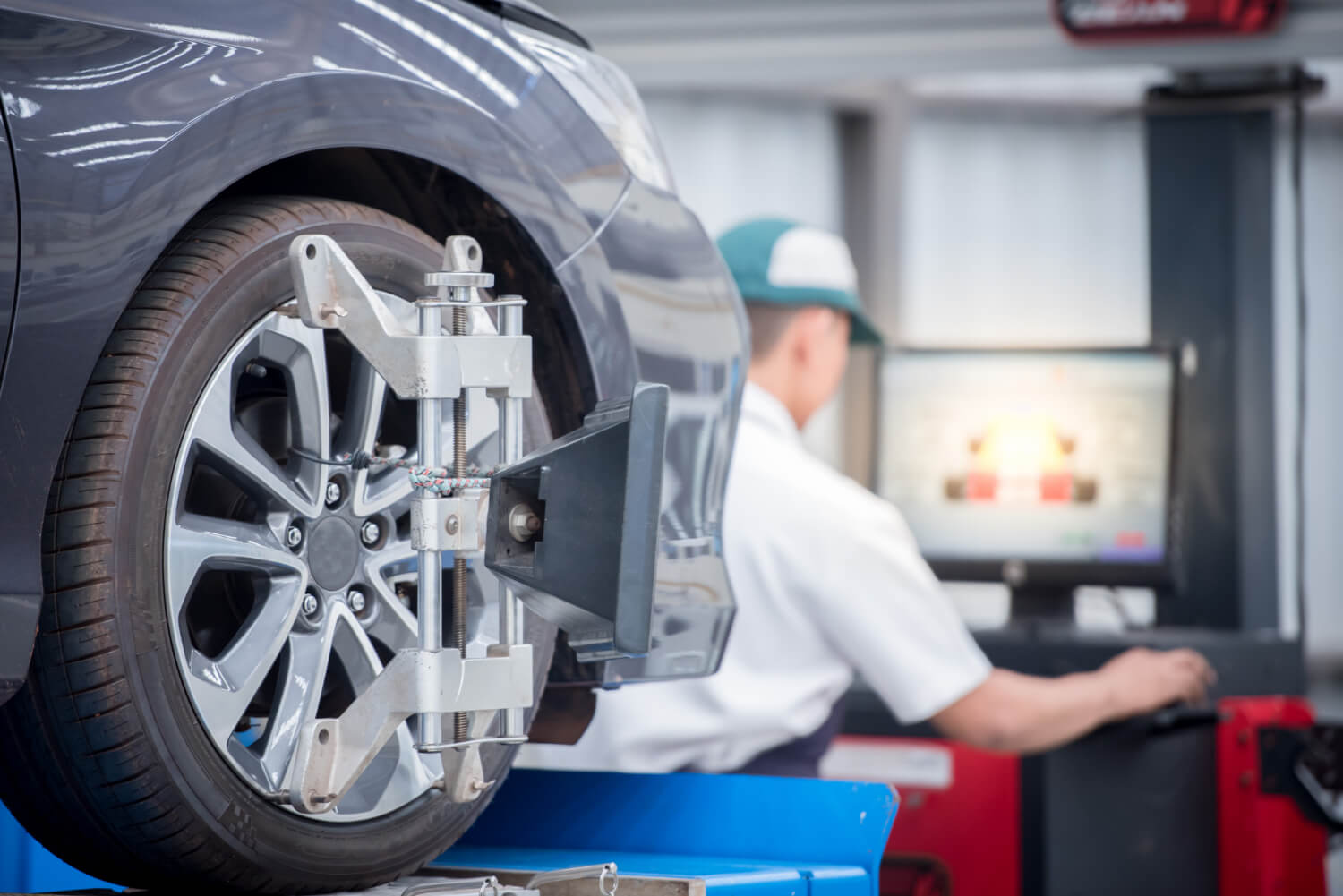
- The alignment machine measures the wheel angles. The car goes onto a level rack, and the technician fits targets or sensors to the wheels. The machine compares the readings with the factory ranges for that vehicle.
- The technician adjusts the angles and checks the readings again. Some angles are set by the design of the suspension and have limited adjustment. If a reading stays outside the factory range, ask what’s causing it and whether a part needs repair.
- The shop checks for any required electronic reset. Some vehicles need a steering angle sensor reset after the wheels are aligned. This helps the car’s stability system recognize where straight ahead is after the work. The vehicle manufacturer’s instructions determine when a reset is required.
Do You Need a Front-End or Four-Wheel Alignment?
A front-end alignment adjusts the front wheels. A four-wheel alignment measures all four and adjusts the front and rear angles where the vehicle allows. Even on a car or truck with a fixed rear axle, the rear readings can help explain how the car tracks. If the rear wheels point slightly to one side, that can affect how the steering wheel sits as you drive. Your suspension design determines which adjustments the technician can make.
How Do You Read an Alignment Report?
Ask for the before-and-after printout. It shows the measured angles before the work, the factory ranges, and the final readings. Ask the technician to explain any value that’s still outside its range and what that means for your car. When comparing quotes for wheel alignment in Brooklyn, check whether the price includes the measurements, the adjustments, and any sensor reset your vehicle requires.
How Are Alignment, Balancing, and Rotation Different?
Alignment sets the angles at which the wheels sit and point. It’s worth checking if the car pulls on a level road or the same edge of a tire keeps wearing faster than the rest. Balancing corrects uneven weight in the wheel and tire assembly. A shake that shows up within a certain speed range can point to a balance issue, though a bent rim or damaged tire can also cause vibration. New tires should be balanced when they’re installed.
Rotation moves the tires to different positions so they wear more evenly. If your vehicle manufacturer recommends rotation, NHTSA advises doing it every 5,000 to 8,000 miles, or sooner if you see uneven wear. Follow the pattern in your owner’s manual. Some cars have different front and rear tire sizes, which can limit how the tires can be moved.
Also Read:
Common Questions About Wheel Alignment
How Long Does a Wheel Alignment Take?
A routine wheel alignment often takes about 45 to 60 minutes. It may take longer if the technician finds a worn part, an adjustment bolt is rusted in place, or your vehicle needs an electronic reset. If you’re booking after a hard impact, ask how much time to allow for the inspection as well as the alignment.
Do New Tires Always Need an Alignment?
Have the alignment measured when you install new tires, especially if the old set wore unevenly or the steering wheel sits off-center. The readings show whether the angles need adjusting. Catching a problem at installation gives you a chance to correct it before the same wear pattern starts on the new set.
Why Does My Car Still Pull After an Alignment?
A pull can come from uneven tire pressure, a tire that pulls to one side as it rolls, or a brake that drags. Road slope can affect how the car feels, too. If the pull continues across several level roads, tell the shop whether it happens while cruising or primarily when you brake. That detail can help narrow down the cause.
Get Your Steering Checked Before the Wear Spreads
If the car started pulling after a pothole hit, bring that detail to your appointment. If you noticed the problem while checking your tires, tell the technician which tire is wearing faster and whether the wear is on the inside or outside edge. Those clues can help the shop check the right parts and explain what the alignment readings show.
For Wheel Alignment in Brooklyn, contact A1 Auto Repair Shop at (718) 859-5292 or visit the shop at 1205 Coney Island Ave #A, Brooklyn, NY 11230. Ask about an alignment check or four-wheel alignment for your vehicle, and mention any recent pothole hit, uneven tire wear, or change in steering when you book.