Many drivers deal with overheating at some point. Engines are designed to maintain a steady temperature, but if the cooling system fails, heat can rise quickly. Even a small problem can quickly lead to serious engine damage. So, it’s important to pay attention if your engine gets too hot.
Most overheating problems start small and come with clear warning signs. If you know what to look for, you can fix the issue before it gets worse. In this blog, we’ll cover why cars overheat, what signs to watch for, and how an auto repair shop in Brooklyn fixes these problems.
What Happens When a Car Overheats
An engine burns fuel to move the car, and that process generates a lot of heat. The cooling system is the part that keeps the heat under control. It uses coolant, a radiator, a water pump, and a few other parts to move heat away from the engine. When all these parts work together, the engine stays at a safe temperature.
If the cooling system fails, heat stays trapped in the engine. Metal parts can get too hot, fluids may not work right, and the engine can wear out faster. The longer you drive with an overheating engine, the more damage it can do.
The Most Common Reasons a Car Gets Too Hot
There are many reasons an engine can overheat, but most problems are caused by just a few parts wearing out or breaking. Here are the most common causes:
- Low or leaking coolant. Coolant is the fluid that carries heat away from the engine. If the level drops too low or a leak forms, there is not enough fluid to do the job. This is one of the top reasons cars overheat.
- A stuck thermostat. The thermostat is a small valve that controls how coolant flows. When it gets stuck closed, the coolant cannot circulate, and the engine overheats quickly.
- A worn-out water pump. The water pump pushes coolant through the engine and radiator. When it wears out or breaks, the coolant stops moving, and heat builds up.
- A clogged or damaged radiator. The radiator cools the hot fluid before it goes back to the engine. Dirt, rust, or damage can block it and stop it from working right.
- A broken cooling fan. If the fan stops spinning, the radiator cannot cool the coolant properly when the vehicle is moving slowly.
- A bad radiator cap. The cap keeps the system under the right pressure. A worn cap lets pressure escape, lowering the boiling point and leading to overheating.
- Cracked or burst hoses. Hoses carry coolant between parts. Over time, they crack, leak, or burst, and the coolant drains out.
- A blown head gasket. This is a serious problem. The head gasket seals parts of the engine. When it fails, coolant and oil can mix, causing the engine to run very hot.
- Low engine oil. Oil does more than keep parts moving smoothly. It also helps carry away heat. When the oil runs low, the engine gets hotter than normal.
Most of these issues worsen if ignored. A small leak now could leave you stranded later. That’s why it’s important to visit a trusted auto repair shop as soon as you notice any warning signs.
Also Read: How Professional Auto Diagnostics Works in Brooklyn
Warning Signs Your Engine Is Running Hot
Cars usually give you a warning before they overheat. If you spot these signs early, you can save yourself money and hassle. Watch for these signs:
- The temperature gauge on the dashboard climbs into the red zone.
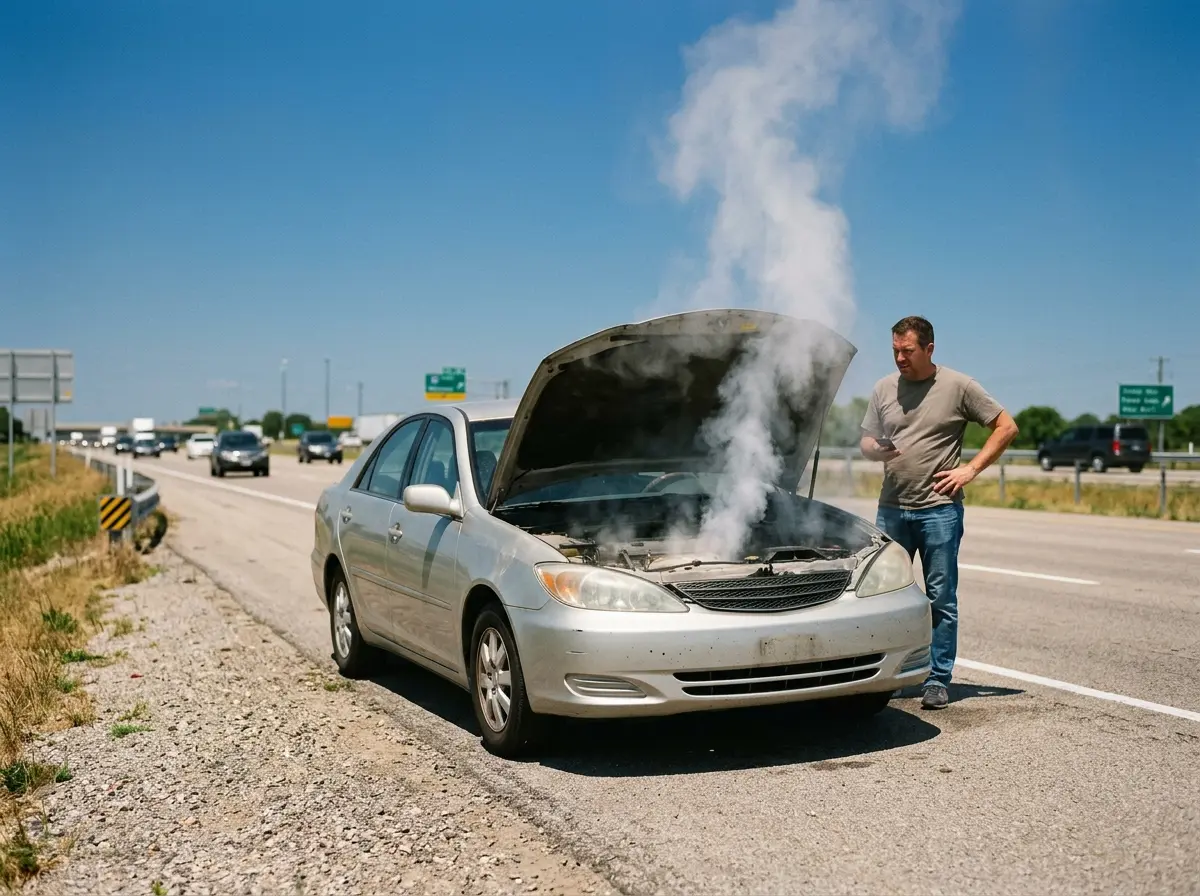
- Steam or something that looks like smoke rises from under the hood.
- A sweet smell in the air often indicates coolant is leaking.
- The engine loses power or begins to feel weak.
- A ticking or knocking sound emanates from the engine.
- The heater blows cold air even when it is turned all the way up.
If you notice any of these signs, take action right away. Even driving a short distance with an overheating engine can lead to an auto repair in Brooklyn that costs far more than fixing the original issue.
What to Do the Moment Your Car Starts to Overheat
If your temperature gauge rises or you see steam, taking the right steps can protect your engine. Staying calm helps, so it’s wise to know what to do in advance. Here’s what you should do:
- Turn off the air conditioner. The AC adds load to the engine and makes it run hotter.
- Turn the heater on full blast. This sounds odd, but it pulls heat from the engine into the car.
- Pull over to a safe spot. Find a place off the road where you can stop safely.
- Shut off the engine. Let it rest and cool down. This stops more heat from building up.
- Wait before opening the hood. The system is under pressure and contains very hot fluid. Allow at least fifteen to twenty minutes.
- Check the coolant only when the engine is cool. Never open the radiator cap on a hot engine because hot coolant can spray out and burn you.
After your car cools down, it might be able to drive a short distance. Still, it’s safest to call a mechanic or a tow truck. Overheating is a sign of a problem, and it will keep happening until it’s fixed properly.
How a Repair Shop Fixes an Overheating Car
Repairs depend on what went wrong. A professional mechanic identifies the root cause rather than guessing. This matters because fixing the wrong part wastes money and doesn’t solve the problem. Here’s how shops typically address common issues:
- Coolant leaks and low coolant levels. The mechanic finds the leak, fixes or replaces the faulty part, and refills the system with fresh coolant. A full flush often removes old, dirty fluid at the same time.
- A stuck thermostat. This is a small, low-cost part. The mechanic removes the old thermostat and installs a new one so the coolant can flow freely again.
- A failed water pump. The shop removes the broken pump and installs a new one, restoring the coolant flow to normal.
- A clogged or leaking radiator. A blocked radiator can sometimes be cleaned out, but a damaged one usually needs a full replacement.
- A broken cooling fan. The mechanic checks the fan motor and the wiring. A new fan or a fixed electrical part gets the airflow working again.
- A worn radiator cap or hoses. These are simple, low-cost parts. Swapping them out fixes leaks and keeps the right pressure in the system.
- A blown head gasket. This is the most costly repair on the list. It takes time and skill, since the mechanic has to open up part of the engine to replace the seal.
A trustworthy shop will check the whole system after repairs. This makes sure the problem is fixed and nothing else is about to go wrong. Getting a full inspection at an auto repair shop helps you feel confident that your car is in good shape.
Why a Hot Engine Should Never Wait
Some car problems can wait, but an overheating engine needs immediate attention. Excessive heat can damage the engine block, warp metal parts, or crack the head. If that happens, repairs can jump from a few hundred to several thousand dollars. In the worst case, the engine could fail completely.
Addressing overheating early saves money and keeps your car safe. Adding coolant or replacing a thermostat is quick and affordable, but a ruined engine is not. That’s why you should treat any sign of overheating as urgent and bring your car in for auto repair in Brooklyn right away.
Also Read: The Ultimate Guide to Auto Repair in Brooklyn
Get Your Cooling System Checked at A1 Auto Repair Shop
At A1 Auto Repair Shop, our skilled mechanics know cooling systems inside and out. Whether you have a slow coolant leak or a bad water pump, we’ll find the problem and fix it right away.
When your car overheats, getting help quickly can make all the difference. Our skilled team handles everything from quick coolant flushes to full radiator and head gasket repairs. Drivers across the area trust us for reliable auto repair in Brooklyn that keeps their cars running cool and in good working order. Call or visit our shop today to keep your engine safe before a small problem becomes a big one.
Frequently Asked Questions
Why does my car overheat?
A car overheats when its cooling system can’t remove enough engine heat, usually due to low coolant, a failed thermostat, a broken water pump, a leaking radiator, or a bad cooling fan. Low or leaking coolant is the most common cause.
Can I drive my car if it’s overheating?
No. Driving an overheating car risks warping the cylinder head, blowing the head gasket, or seizing the engine. Pull over safely, turn off the engine, and let it cool for at least 15–30 minutes before checking.
How much does it cost to fix an overheating car?
Repair costs typically range from $100 to $150 for a thermostat or coolant flush, $300 to $900 for a water pump or radiator, and $1,000 to $2,000+ for a blown head gasket. The price depends entirely on the underlying cause.
What are the first signs of an overheating engine?
The first signs are a temperature gauge climbing into the red, steam or vapor from under the hood, a sweet coolant smell, reduced power, or a dashboard warning light. Acting at the earliest sign prevents major engine damage.
How do you fix an overheating engine?
Fixes depend on the cause: refill or flush coolant, replace a faulty thermostat, water pump, or radiator, repair leaks, or fix the cooling fan. Persistent overheating needs a mechanic to pressure-test the system and rule out a head gasket failure.